
Hypermobility & Ehlers-Danlos (EDS) Physical Therapy in Amherst, NH
If you’re hypermobile or have Ehlers-Danlos Syndrome (EDS), you may have found that your body doesn’t respond well to generic exercise or standard rehabilitation. Movements that help others may flare your symptoms, leave you exhausted, or make you feel less stable instead of stronger.
At PT Health Academy, I provide hypermobility-informed physical therapy for people whose bodies move differently. This care is designed to improve joint stability, control, and confidence—without pushing your system past what it can tolerate.
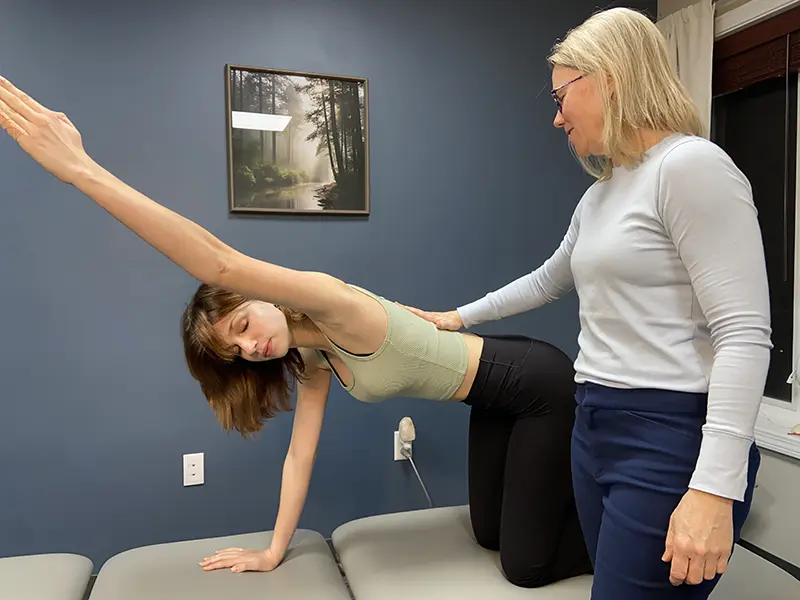
Specialized Care for Bodies That Move Differently
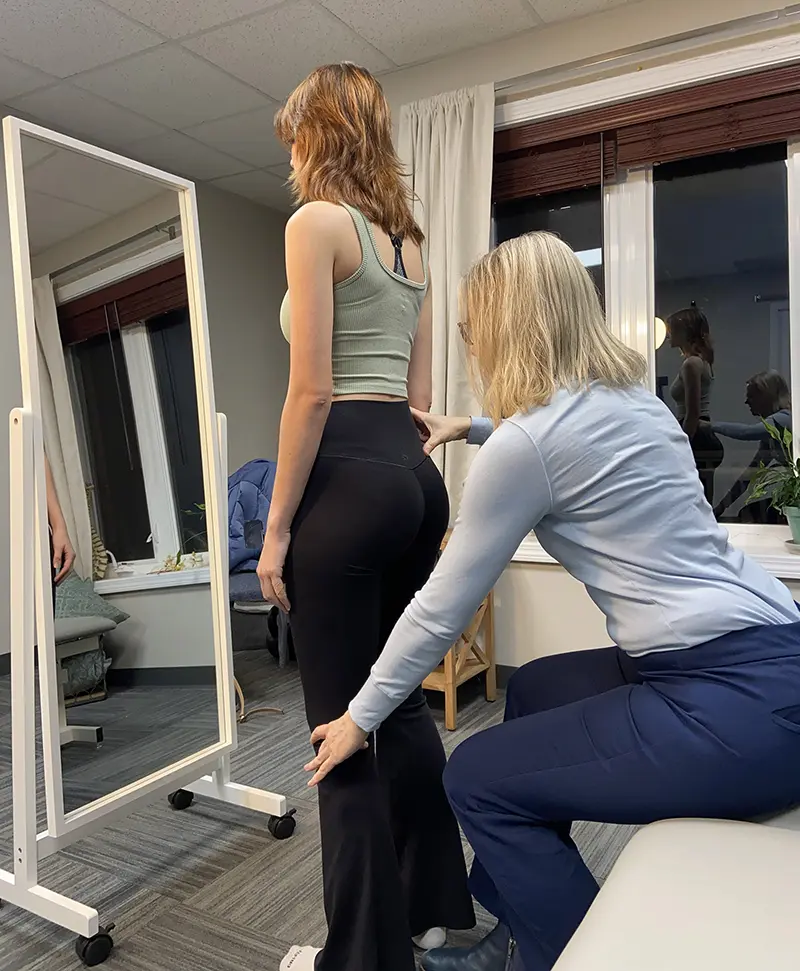 Hypermobility and EDS require a different strategy than traditional rehabilitation. Instead of stretching more or pushing through symptoms, my approach prioritizes stability before flexibility, control before load, and quality before quantity.
As both the owner and physical therapist, you’ll work one-on-one with me every session. I take time to understand how hypermobility is affecting your daily life, energy levels, and confidence in movement. With over 25 years of experience, and a background in orthopedics, sports medicine, dance medicine, and bone health, I look beyond individual joints to understand how posture, movement patterns, and nervous system sensitivity all influence your symptoms.
Care begins with a thorough evaluation so you understand why your body responds the way it does. Treatment often includes targeted strengthening at the right dose and intensity for your body, movement retraining, balance and proprioceptive work, postural support, and education around pacing and recovery. Progression is guided by your tolerance from session to session, with the goal of helping you move with more control, less fear, and greater trust in your body over time.
Common Challenges I Help With
People with hypermobility or EDS often come to me with:
- Multiple joint pains or feelings of instability
- Frequent strains, sprains, or subluxations
- Difficulty tolerating traditional strengthening programs
- Fatigue or symptom flares after exercise
- Poor balance or body awareness
- Postural challenges
- Fear of movement after repeated setbacks
- Difficulty returning to exercise, dance, or sport
Care That Fits Your Life
Hypermobility and EDS care rarely fits well into rushed or rigid insurance models that only allow for one region of treatment, or limit your progress to 6–8 weeks of guidance. We have the flexibility to work together as your body tolerates, not what insurance dictates.
I offer appointments in my Amherst, NH office, as well as in-home physical therapy throughout Southern New Hampshire, including Milford, Merrimack, Nashua, Manchester, Brookline, Mont Vernon, Temple, and Mason. Telehealth sessions are also available when appropriate.
No referral or formal diagnosis is required to get started.
Focused on Trust, Confidence, and Long-Term Function
The goal of hypermobility-informed physical therapy isn’t perfection—it’s helping you move with more control, less fear, and greater trust in your body. Together, we build strategies that support consistency and long-term function, not constant flare management.